-
Summary
- 2026-05-13 21:24
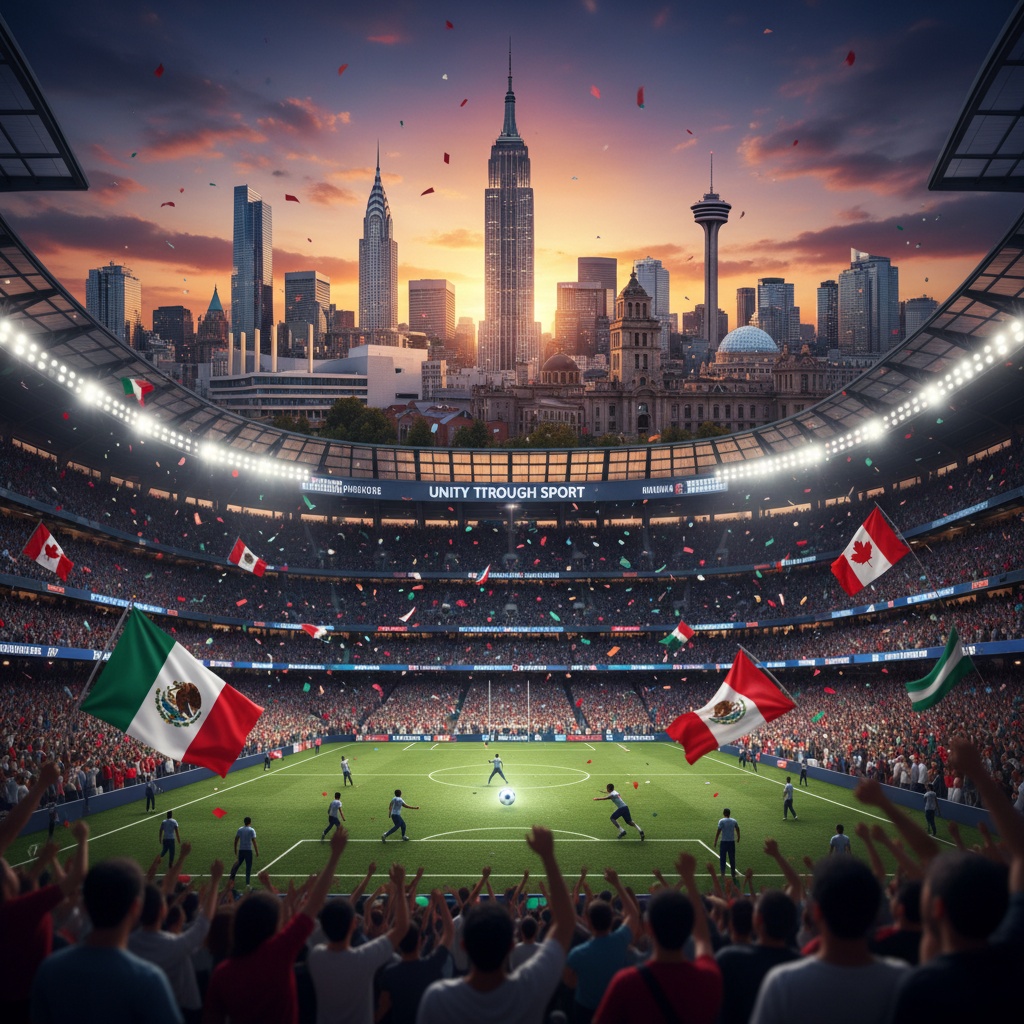
The FIFA World Cup continues to evolve as the world's premier football tournament, not only in its scale but also in its hosting formats. Since its inaugural edition in 1930, the competition has showcased a rich history of host nations, with some countries like Italy, France, Brazil, Mexico, Germany, and the United States hosting multiple times. Breaking new ground, the 2026 World Cup will be the first to be jointly hosted by three countries—Canada, Mexico, and the United States—highlighting a shift toward larger, more collaborative global events. This tournament will feature an expanded 48-team format across 16 cities on the North American continent, from Vancouver in Canada to Miami in the United States, playing out 104 matches over 39 days.
Looking beyond 2026, the trend of multi-nation hosting continues, with the 2030 FIFA World Cup planned across Spain, Portugal, and Morocco, commemorating the centennial of the tournament’s founding with a symbolic opening also involving Argentina, Paraguay, and Uruguay. Further ahead, Saudi Arabia is set to host the 2034 edition, marking the 25th edition of the World Cup. These developments emphasize FIFA’s strategic move towards sharing event responsibilities across nations, broadening geographic representation and cultural exposure while meeting increasingly complex logistical demands.
Historically, FIFA hosts have had to meet stringent stadium and city requirements—such as proposals for at least 14 all-seater stadiums with capacities of 40,000 or more, including larger venues for opening matches, semifinals, and finals. For instance, the 2026 final will be held at MetLife Stadium in New Jersey, with an 87,157 seating capacity, while the 2030 opening ceremonies will honor football heritage across multiple continents. These benchmarks underscore FIFA’s commitment to combining sporting excellence with world-class facilities and fan experiences, setting new standards for future tournaments.
The 2026 FIFA World Cup marks a landmark event as the first tournament hosted jointly by three countries—Canada, Mexico, and the United States—and expands the competition to 48 teams across 104 games over 39 days. The event spans 16 host cities: 11 in the US, including New York, Los Angeles, and Atlanta; 3 in Mexico—Mexico City, Guadalajara, and Monterrey—and 2 in Canada—Toronto and Vancouver. The opening ceremony will be held at the historic Estadio Azteca in Mexico City, which has previously hosted World Cup finals featuring legends such as Pelé and Diego Maradona. Semifinal matches are set for Mercedes-Benz Stadium in Atlanta and AT&T Stadium in Dallas, while the final will take place at MetLife Stadium in New Jersey with a seating capacity of 87,157.
Each host city combines vibrant footballing culture with unique local atmospheres: Toronto is known as Canada's football heart, influenced by its diverse immigrant fan base and Major League Soccer's Toronto FC; Vancouver offers a scenic west coast setting; Guadalajara carries historic significance, having hosted multiple international sporting events; and Mexico City, a massive metropolitan hub, exudes deep football legacy along with its high altitude conditions. This geographic and cultural diversity will enhance the tournament’s global appeal and logistical complexity.
Since the FIFA World Cup’s inception in 1930, the tournament has been hosted by a wide array of countries across continents, with interruptions only during World War II in 1942 and 1946. Multiple editions have been held by countries such as Italy, France, Brazil, Mexico, and Germany. A notable milestone came in 2002 when South Korea and Japan co-hosted for the first time, followed by the unprecedented triple-nation hosting for 2026 (USA, Mexico, Canada) and again in 2030 (Spain, Portugal, Morocco). Saudi Arabia is slated as the host for the 2034 tournament, marking FIFA’s sustained diversification of host nations to new regions.
This evolution toward co-hosting arrangements reflects FIFA’s aim to manage the increasing logistical demands of a growing tournament while spreading the economic and cultural benefits more widely. Past withdrawals and changes, like Colombia pulling out in 1986 and Mexico stepping in, have shaped bidding dynamics, influencing the robust selection criteria implemented in recent decades. This history illustrates FIFA’s balancing act: maintaining tradition while innovating to accommodate global football’s expanding footprint.