-
Summary
- 2026-04-30 01:27
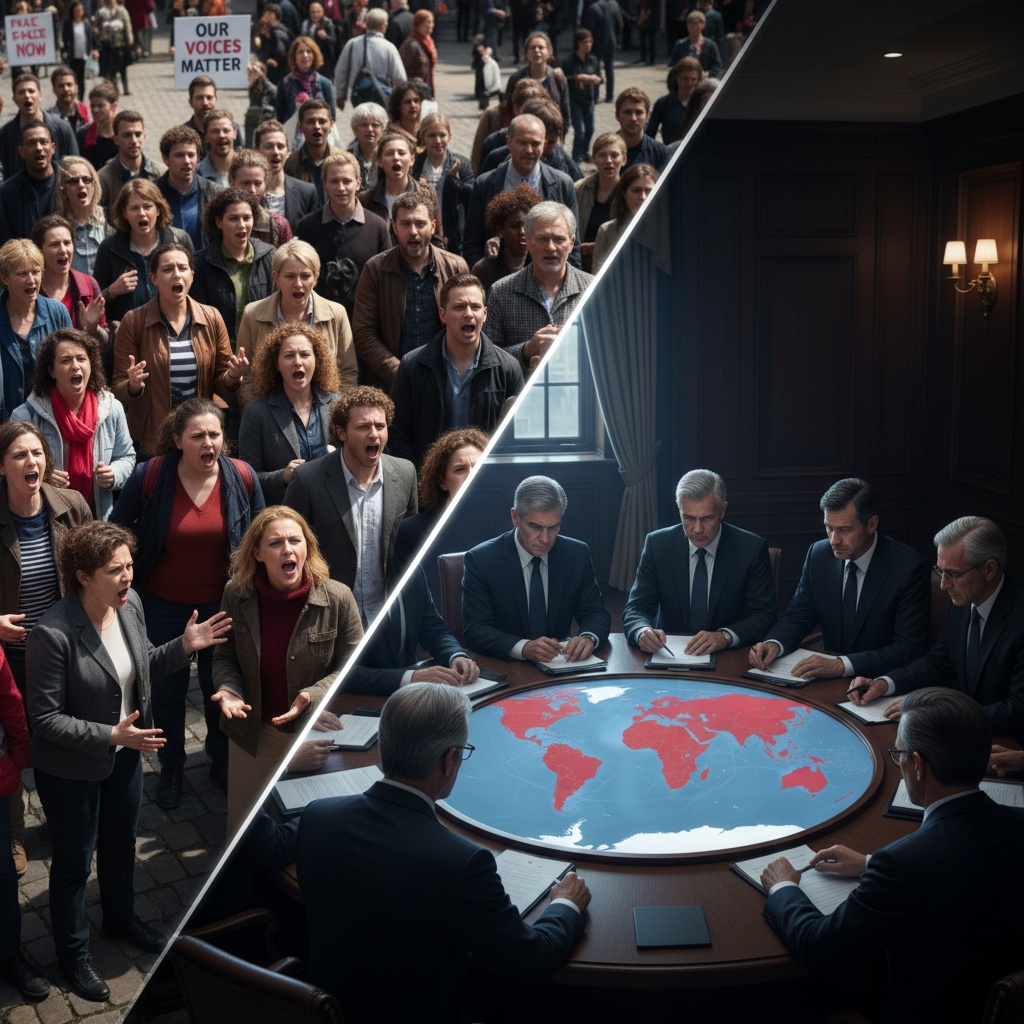
The body of research on foreign policy decision-making reveals contrasting perspectives on the influence of public opinion and the internal dynamics shaping governmental actions on the international stage. Traditional realist theories emphasize an elite-centric model, portraying public opinion as emotionally driven, volatile, and easily manipulated, thus marginalizing its role in foreign policy formulation. Conversely, more recent political psychology approaches seek to integrate public opinion as a meaningful factor, examining how attitudes toward military engagement, economic policies, and international threats form and evolve within the public sphere. This nuanced view acknowledges that while policymakers often drive decisions based on rational calculation and national interest, public sentiment can shape, constrain, or legitimize those decisions under specific conditions.
Analytically, foreign policy decision-making is frequently framed through models such as the rational actor paradigm, which depicts policymakers as unitary actors making coherent, information-based choices to maximize national benefit. However, critiques underscore the limitations of this model, noting incomplete information, cognitive biases, and competing bureaucratic interests. Complementary models explore group dynamics, inter-agency competition, and domestic political pressures, revealing a complex interaction between individual rationality and structural constraints. Educational programs focused on Foreign Policy Analysis emphasize the importance of understanding these multi-layered processes to elucidate why states act as they do in the international system.
Adding a vital cultural dimension, cross-cultural studies on conflict management styles highlight how underlying societal values influence negotiation and diplomatic behavior. Comparative analyses of Chinese, Japanese, and American approaches illustrate fundamental differences in conflict orientation—such as a preference for avoidance versus confrontation, subtlety versus directness, and hierarchical versus egalitarian communication. These cultural patterns impact not only interpersonal but also organizational and international interactions, with implications for multinational corporations and diplomatic engagements. Recognizing these cultural frameworks is crucial for preventing misunderstandings and fostering effective cross-national cooperation.
This cluster delves into scholarly debates on the role of public opinion in shaping foreign policy. Foundational realist scholars like Hans Morgenthau and John J. Mearsheimer argue that public opinion is largely emotional, uninformed, and manipulable, asserting that state leaders act predominantly out of calculated national interest rather than popular demands. For example, governments may use strategic communication to frame issues—such as convincing the public about the existence of weapons of mass destruction prior to the Iraq War—to manufacture consent.
On the other hand, political psychology research, as reflected in Joshua D. Kertzer’s 2021 Oxford Handbook chapter, challenges the sidelining of public opinion. It presents a more optimistic view that publics can hold structured and sometimes stable attitudes on foreign affairs, such as responses to military interventions and trade policies. This shift builds on events like the Vietnam and Gulf Wars, which exposed the dynamic interplay between public attitudes and policy decisions, highlighting the necessity to incorporate micro-level psychological insights into international relations theories.
This sub-cluster encompasses analytical frameworks used to understand how states formulate foreign policy. The rational actor model stands out as a dominant approach, describing decision-makers as rational agents following a systematic process: identifying problems, defining objectives, assessing options, and selecting the most beneficial strategy. Graham Allison’s seminal work analyzing the Cuban Missile Crisis is often cited for elaborating this model alongside other perspectives like bureaucratic politics and organizational process theories.
Critics of the rational actor model note its idealized assumptions, particularly regarding access to full information and the objectivity of rationality. Real-world decision-making involves intra-governmental power struggles, cognitive limitations, and varying interests among multiple actors within a state apparatus. Academic programs in Foreign Policy Analysis emphasize comprehending these complexities, highlighting the importance of systemic, national, and sub-national influences that differentiate how countries react within the international system.
This cluster investigates cultural variations in conflict handling styles among Chinese, Japanese, and American populations. Research challenges simplistic East-versus-West dichotomies by demonstrating the heterogeneity within and across cultural groups. For instance, while Asian cultures are often characterized by a collectivist, conflict-avoiding orientation, studies show significant intra-regional differences and the influence of situational factors.
Moreover, American and Chinese approaches display fundamental contrasts in negotiation styles—such as directness versus subtlety, aggressiveness versus modesty, and command versus courtesy. Case studies involving multinational corporations operating in China underscore the importance of cultural awareness for effective conflict resolution and business success. The analysis underlines that misunderstanding these value-driven behaviors can exacerbate tensions and impede both interpersonal and international cooperation.