-
Summary
- 2026-05-05 03:15
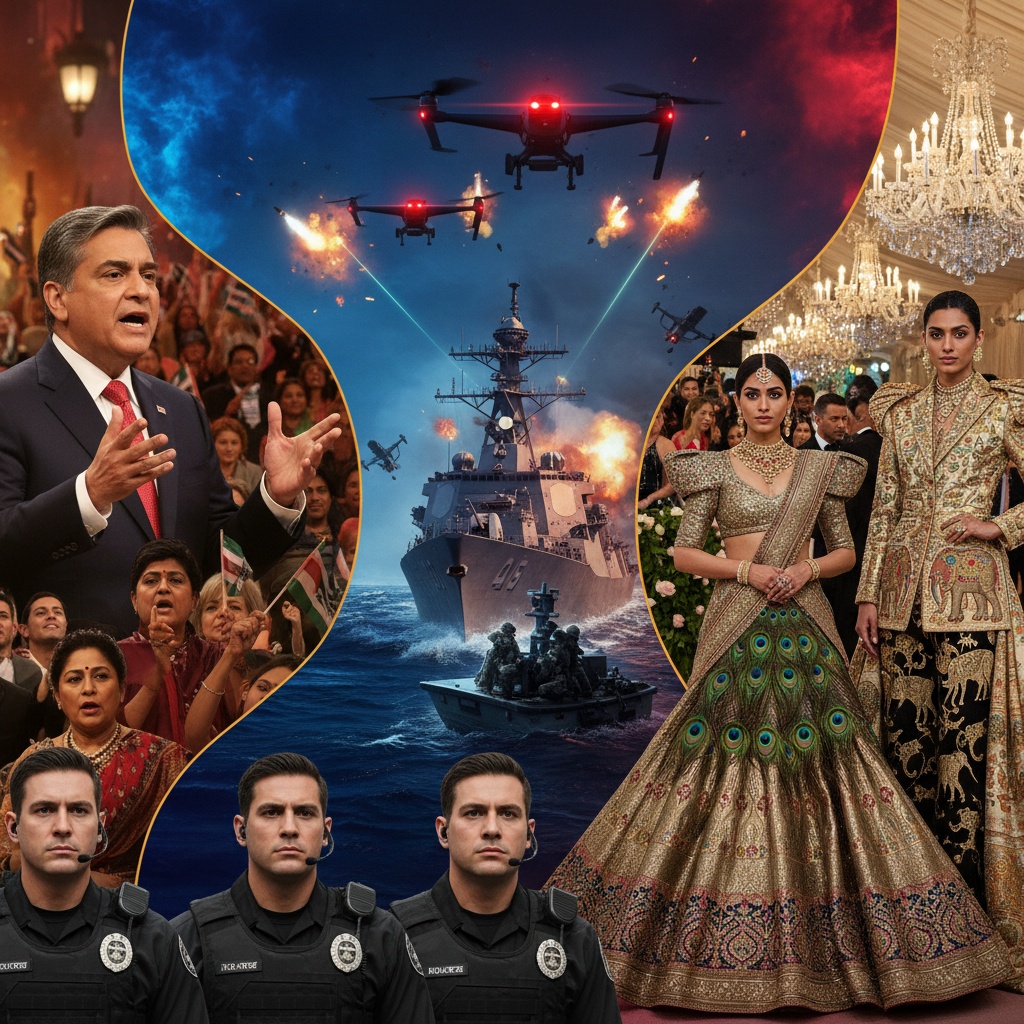
The week leading up to May 5, 2026, has been marked by significant events across politics, international security, and culture, reflecting dynamic shifts in power, renewed global tensions, and creative tributes on the world’s biggest fashion stage. The West Bengal assembly elections delivered a historic breakthrough for the Bharatiya Janata Party (BJP), which managed to blunt the long-standing dominance of the Trinamool Congress (TMC), aided in part by a substantial central security deployment amidst fears of poll violence. This political upheaval highlights the intertwining of security considerations and identity-driven campaigning, with Prime Minister Narendra Modi personally anchoring a high-profile campaign marked by strategic symbolism and grassroots mobilization. Notably, the rise of candidates like Kalita Majhi, who transitioned from a domestic worker to an MLA, underscores the BJP’s successful appeal to new voter segments, reshaping Bengal’s political landscape.
Concurrently, international security concerns flared in the United States, with an armed confrontation near the White House triggering a brief lockdown and road closures. The U.S. Secret Service responded decisively, underscoring ongoing vigilance around key government sites in a climate of rising security risks. In a related vein of global tension, U.S. military forces repelled multiple Iranian drones, missiles, and small boats attempting to disrupt 'Project Freedom'—a naval operation aimed at reopening the crucial Strait of Hormuz for commercial shipping. These developments point to a persistent flashpoint in U.S.-Iran relations, with implications for global energy markets and international maritime security.
On a culturally vibrant note, the 2026 Met Gala showcased a rich tapestry of artistic homage and high fashion statements. Filmmaker Karan Johar’s debut appearance, in an ensemble inspired by the iconic Indian artist Raja Ravi Varma, offered a deeply personal nod to Indian heritage and the event’s 'Fashion is Art' theme. Alongside Johar, Natasha Poonawalla’s dramatic look, blending couture by Dolce & Gabbana with an art sculptural piece, captured the night’s essence of fashion as a living gallery. In an intriguing entertainment industry sidebar, actors Blake Lively and Justin Baldoni settled a highly publicized legal dispute related to alleged on-set misconduct, allowing both to move forward—Lively notably attending the Met Gala shortly after the settlement—signaling closure in a contentious chapter within Hollywood.
Taken together, these narratives reveal a world grappling with political transformation, fragile security environments, and the power of cultural expression. From Bengal’s shifting political faultlines and the renewed military focus on strategic waterways to the celebration of identity and artistic legacy on the global fashion stage, the events of early May 2026 encapsulate a complex, interconnected era where local contests and global incidents coalesce to shape contemporary discourse.
The 2026 West Bengal elections witnessed a landmark political shift as the Bharatiya Janata Party (BJP) broke through the Trinamool Congress's (TMC) longstanding hold on the state. A key factor influencing this outcome was the unprecedented deployment of central security forces following years of poll-related violence, which reshaped voter confidence and security perceptions. The BJP's intense campaign focus, propelled by Prime Minister Narendra Modi’s extensive outreach—marked by over 22 visits during the election period—transformed the contest into a charged identity-driven battle centered on welfare and competing political narratives.
Illustrative of the BJP’s grassroots penetration is the compelling story of Kalita Majhi, a former domestic worker earning 2,500 INR per month, who won the Ausgram seat. Her victory epitomizes the party’s strategy of elevating candidates from modest backgrounds, symbolizing a broader political realignment in Bengal. This combination of security presence, carefully crafted political messaging, and social mobilization disrupted traditional voting patterns, culminating in a historic ‘saffron wave’ that significantly altered the state’s political map.
On May 4, 2026, an armed individual was shot by U.S. Secret Service personnel near the White House, triggering a temporary lockdown of the complex and road closures within central Washington, D.C. The rapid response by law enforcement highlighted ongoing security challenges in protecting key government institutions amid heightened alert levels.
Simultaneously, U.S. military operations in the Persian Gulf faced direct Iranian resistance as forces intercepted multiple cruise missiles and drones, and destroyed six Iranian small boats attempting to disrupt 'Project Freedom'—a U.S.-led naval initiative to reopen the strategically vital Strait of Hormuz for commercial shipping. The clashes exacerbate existing geopolitical frictions, underscoring the volatility of the region and the complex interplay between military deterrence and diplomatic tensions.
The Met Gala 2026, themed 'Fashion is Art,' provided a creative platform for celebrities to blend sartorial craftsmanship with cultural storytelling. Filmmaker Karan Johar made a regal debut wearing a Manish Malhotra ensemble inspired by the legendary Indian painter Raja Ravi Varma. The outfit’s hand-painted elements and intricate embroidery transformed Johar’s appearance into a heartfelt tribute to Indian artistic heritage, symbolizing a nuanced dialogue between fashion and identity.
Natasha Poonawalla, a Met Gala regular, captivated the audience with a dramatic couture look by Dolce & Gabbana complemented by a sculpture from Marc Quinn, embodying the event’s celebration of fashion as a mobile art exhibition. These standout appearances illustrate how the Met Gala continues to evolve as a cultural nexus where personal narrative, artistry, and glamour intersect on a global stage.
Actors Blake Lively and Justin Baldoni reached a settlement in their contentious legal dispute related to the 2024 film 'It Ends with Us,' just weeks before the scheduled trial. Lively had accused Baldoni of conspiring with publicists to undermine her reputation following private allegations of sexual harassment on set. Baldoni consistently denied all claims and asserted that the complaints were fabricated for personal gain.
The joint statement following the settlement emphasized a shared commitment to raising awareness and supporting survivors of domestic violence, framing the resolution as a step toward closure and constructive forward movement. Shortly after the settlement, Lively made a notable appearance at the 2026 Met Gala, signaling a return to professional engagements.